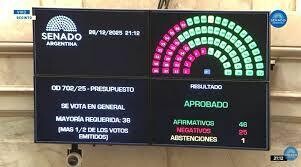
Argentina’s Senate approved the 2026 budget, the first law passed under President Javier Milei’s administration. The move formalises a new stage where the "law of laws" establishes the rules for state fiscal policy and provides spending predictability.
Transitioning to a fixed budget will allow the government to implement its economic plan and control adjustments amid market fluctuations. For the past three years the proposal has been extended, creating an "exceptional" status and weakening parliamentary oversight.
The most heated debates centered on Chapters 2 and 30. Chapter 2 earmarked 4.8 trillion pesos for national universities, but with conditions that tighten spending oversight. Chapter 30 repeals previous mandatory spending targets for education and science.
Senator Beatriz Ávila said, "The budget isn’t ideal, but it breaks the cycle of uncertainty that would arise from a third consecutive year without a law." In total, 46 votes in favour, 25 against and one abstention wrapped up the session.
For the previous three years there was no clear legislative framework, and only now does the government gain the ability to stabilise the economy and regain fiscal control.